Every morning, modern life demands an overwhelming number of micro-decisions before we ever step foot outside the door. From smartphone notifications and breaking news headlines to overflowing calendars and inbox alerts, cognitive bandwidth is under perpetual siege. In this relentless visual environment, an overstuffed closet filled with disposable, trendy, ill-fitting clothes does not represent freedom of choice—it represents decision fatigue.
Wardrobe restraint is the deliberate practice of eliminating the non-essential so that what remains can perform with quiet excellence.
The Illusion of Cheap Variety
The fast-fashion model of the past two decades conditioned consumers to prioritize novelty over substance. We were taught that owning thirty five-hundred-rupee t-shirts that twist and warp after two washes is somehow preferable to owning four or five substantial, meticulously engineered pieces that look better with age.
The hidden cost of this variety is subtle but corrosive:
- Closets filled with garments you feel ambivalent about wearing.
- The morning anxiety of trying on three different shirts before settling on one that merely tolerates the day.
- A drawer full of flimsy fabrics that turn transparent under office lighting or lose their collar shape within an hour.
Substance as a Stabilizing Anchor
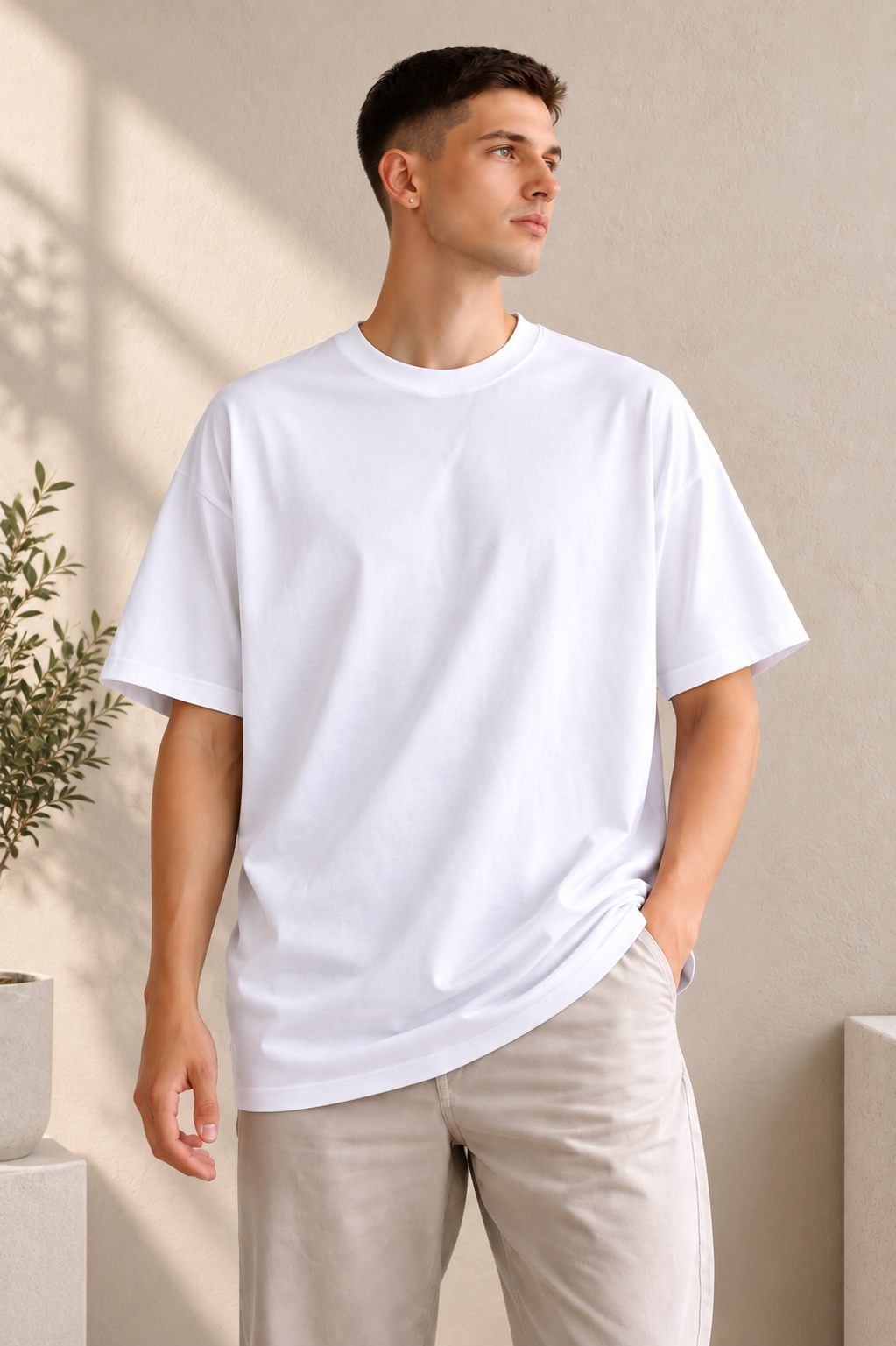
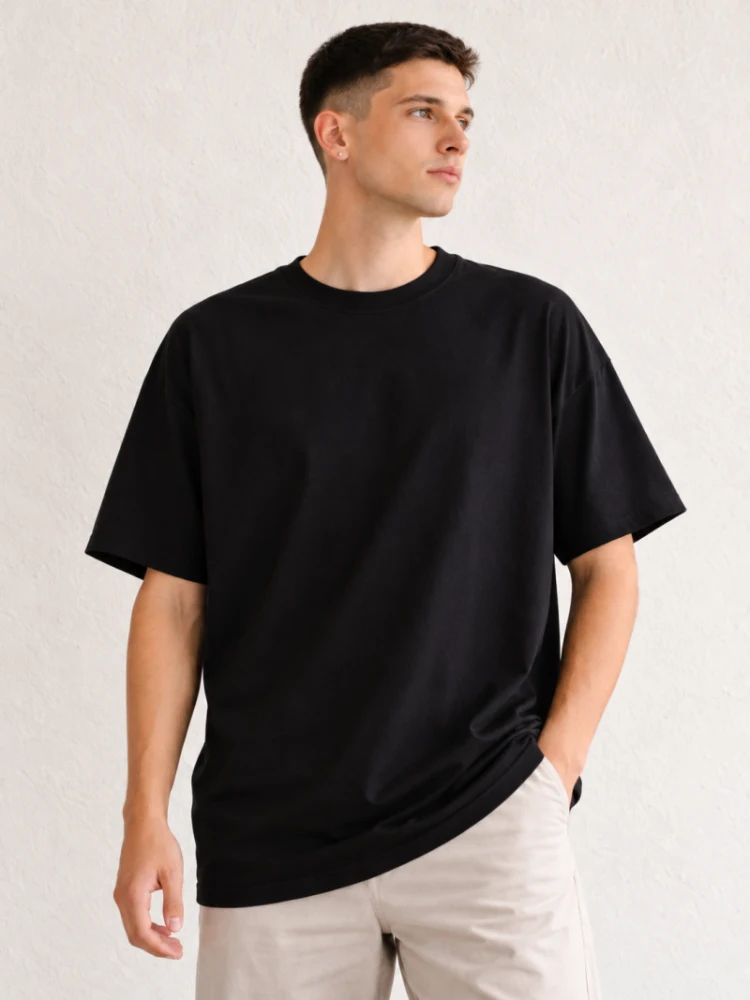
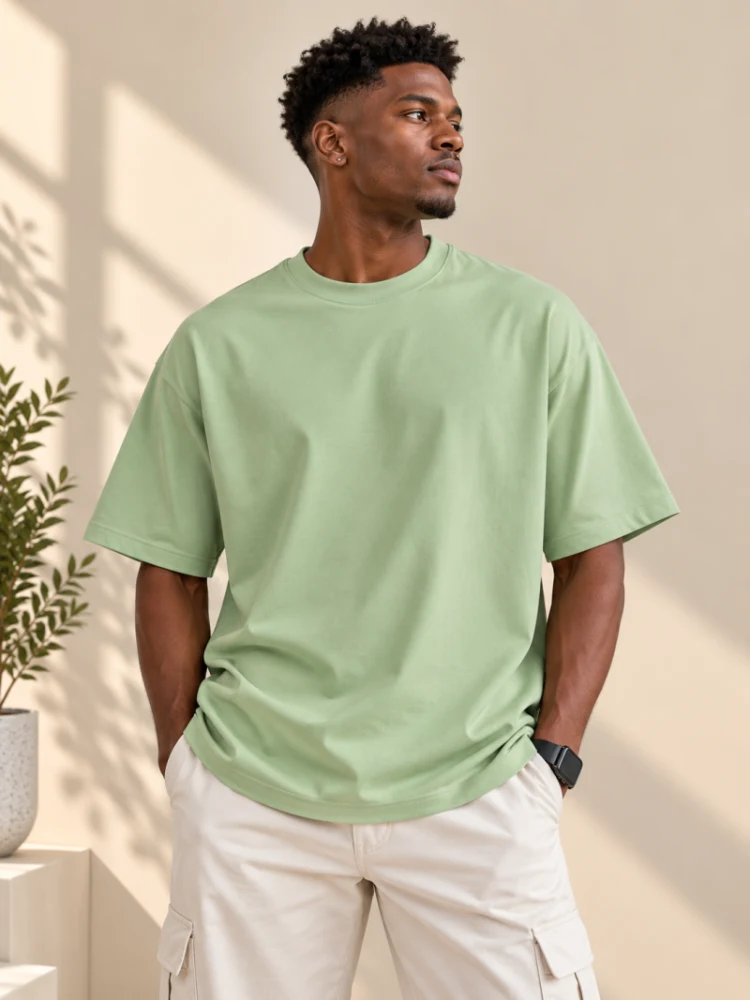
When you simplify your everyday uniform to a handful of foundational staples—such as a 220 GSM heavyweight combed tee in Chalk White, Raw Bone, and Deep Black—dressing ceases to be a problem to be solved. You reach into the drawer with complete certainty. You know precisely how the collar will frame the neck, how the dense fabric will fall straight from the shoulder without clinging to the torso, and how it will feel after eight hours of work, commute, and travel.
This is what we define as calm confidence. It is the luxury of forgetting about your clothes because you know they are doing their job with silent competence.
Architectural Minimalism
Minimalism is frequently misunderstood as boring, stark, or deprived. But in textile architecture, minimalism is the most demanding discipline of all. When a t-shirt has no loud chest branding, no neon graphics, and no trendy distressing to distract the eye, every technical detail is exposed:
- The exact millimeter width and tension of the neck rib.
- The precision of the twin-needle hem stitching.
- The weight, hand feel, and opacity of the combed cotton.
When those fundamentals are executed with uncompromised integrity, the garment transcends seasonal trend cycles. It belongs just as naturally under an unconstructed tailored blazer at a gallery opening as it does on a relaxed weekend flight.
Own fewer pieces. Demand exceptional fabric. Wear them until they become an inseparable extension of your life.